Independent product experiment
Wayfolk
Planning, navigating, and remembering a group trip as one shared journey.
TL;DR
Most travel tools organize reservations and places. Wayfolk organizes the people around them. This mobile concept follows a crew from invitation to itinerary, shared navigation, and the memories that remain after the day is over.
The Short Version
Wayfolk is an end-to-end group travel experiment. One shared trip holds the plan, suggestions, votes, live whereabouts, captured moments, and the story the group brings home.
The Mess
Group trips are usually assembled across chat threads, saved-map lists, screenshots, calendars, and camera rolls. The information exists, but the group context—who suggested what, who is coming, and where everyone is—keeps falling between tools.
My Part in This
- Framed the experiment around coordination rather than booking.
- Designed the full journey from account creation to trip memories.
- Connected itinerary, map, voting, navigation, and capture into one model.
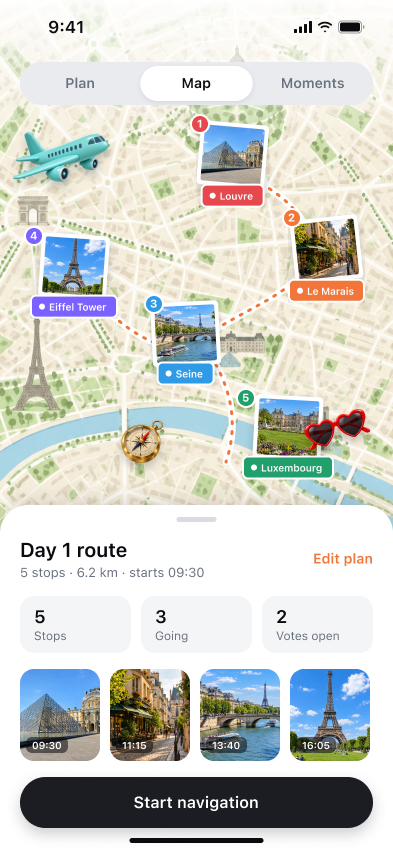
- Created the mobile interaction and visual system across twelve screens.
Choices Were Made
- Make the trip—not the individual traveller—the primary object.
- Show suggestions and votes inline with the plan.
- Keep crew awareness visible without turning travel into surveillance.
- Treat captured memories as part of the journey, not an export after it.
The product story
One trip, held together from the first invite to the final memory.
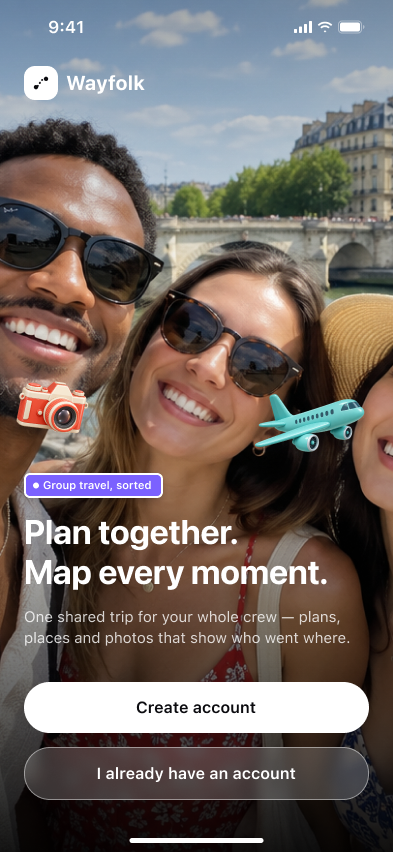
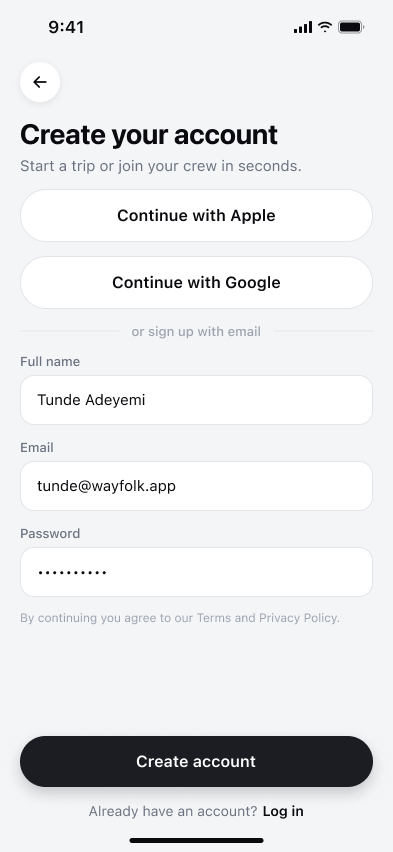
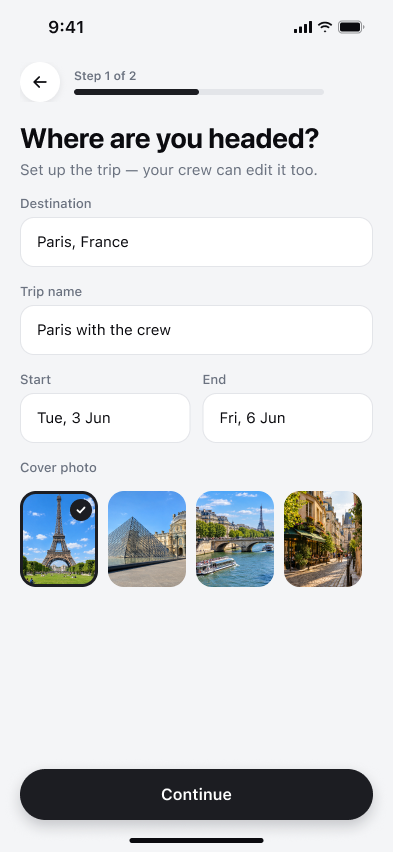
01 / Form the crew
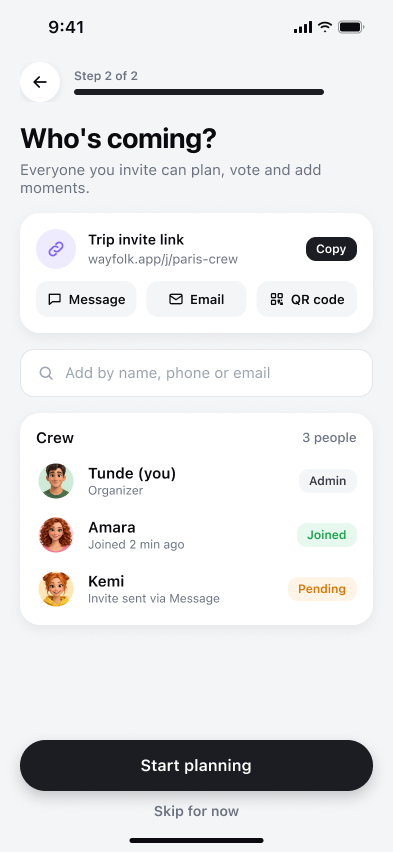
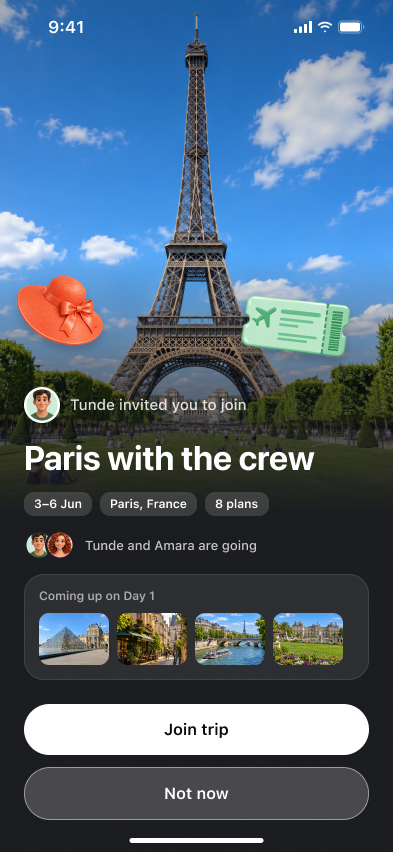
The trip begins as a social object. Organizers establish just enough structure, while invitees can understand the destination, dates, people, and early plan before committing.
02 / Build a plan together
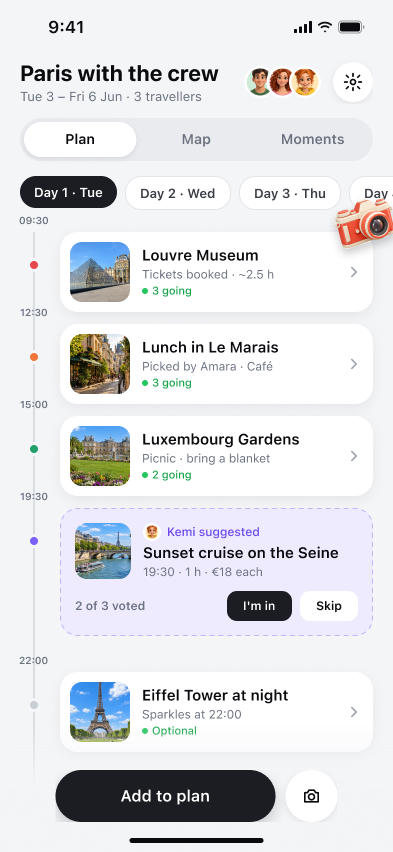
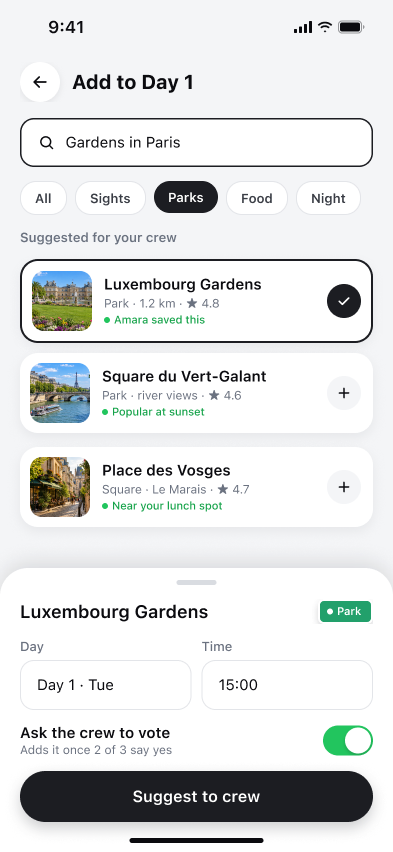
Suggestions are visible acts of collaboration. Places carry their source, votes, timing, and attendance so the itinerary records how a decision formed instead of presenting a mysteriously finished list.
03 / Make the map operational
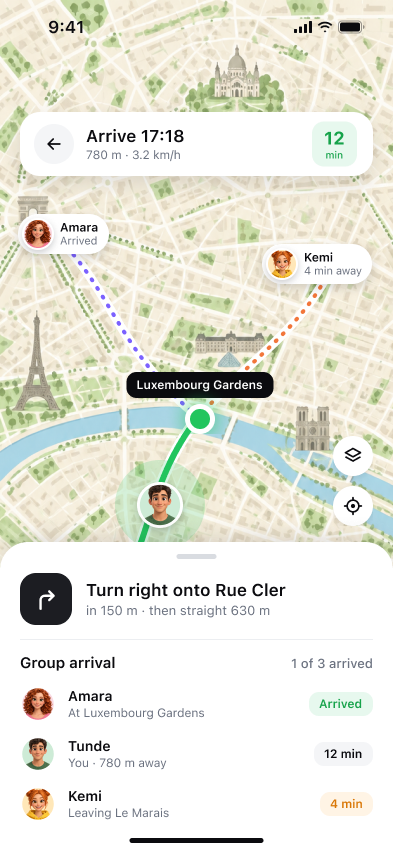
The map is not a second representation of the itinerary. It turns the plan into movement: sequence, distance, arrival, and the live position of a crew converging on the same place.
04 / Preserve the shared day
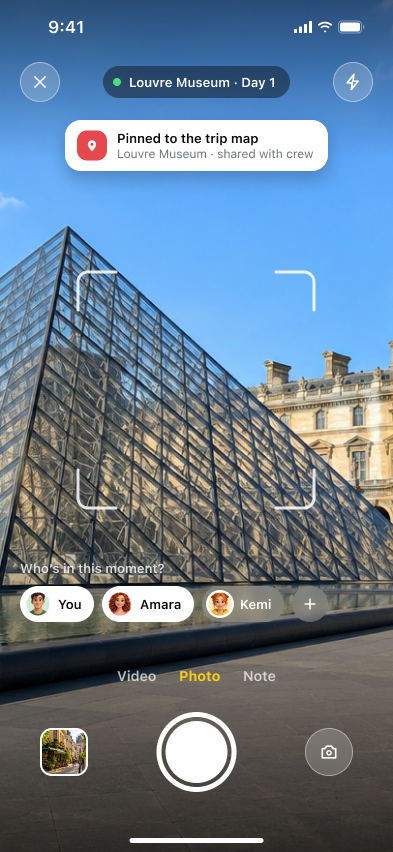
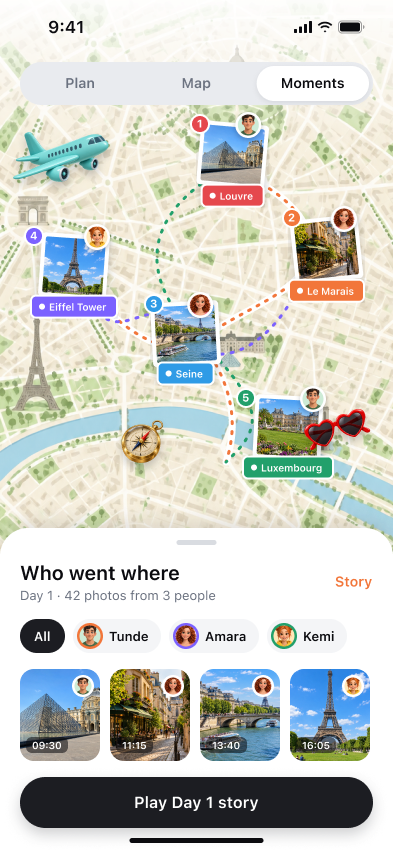
Capture inherits the context the product already knows—place, day, route, and people. Those fragments return as a spatial story, letting the group revisit not only what they photographed, but who went where.
Motion study / 01
The group moves. The interface keeps everyone oriented.
Route drawing, crew arrival, and the next navigation step share one quiet timeline. The motion clarifies changing state without competing with the map.
GSAP timeline + CSS keyframes · loops automatically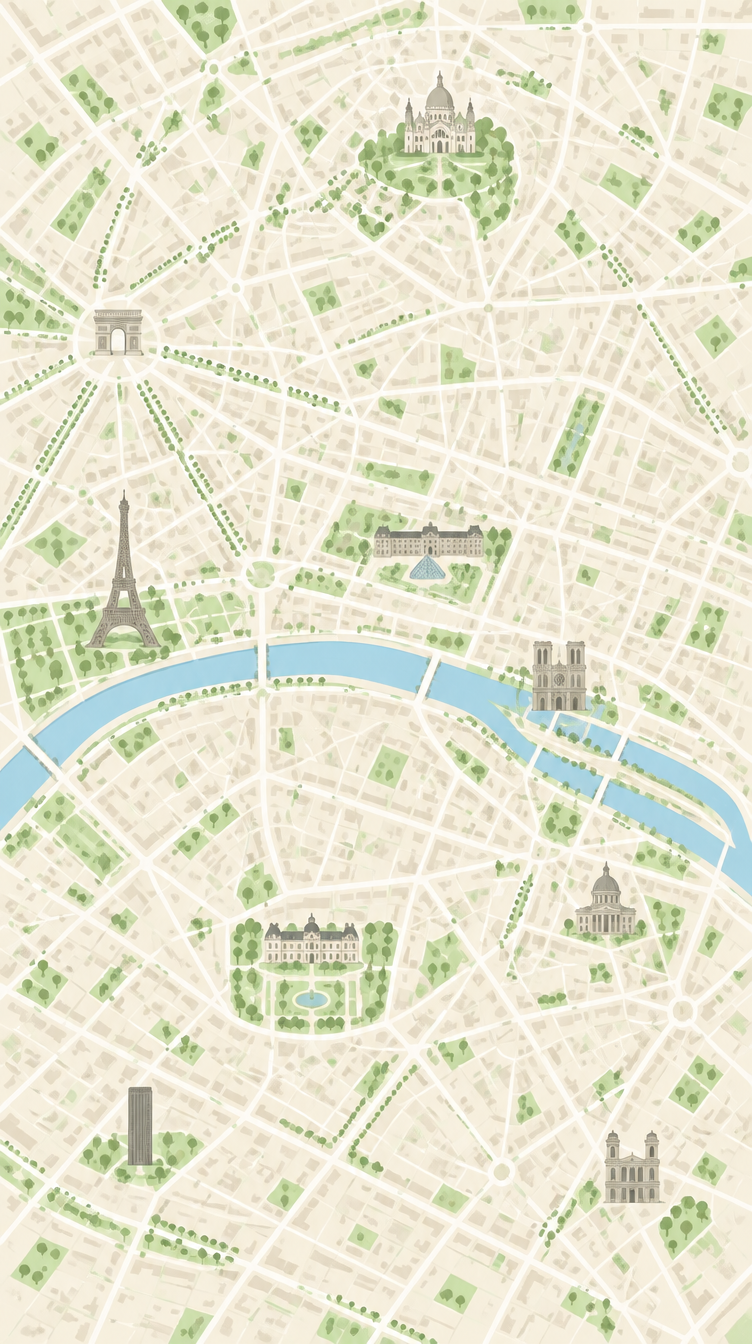
 AmaraArrived
 Kemi4 min away
 AmaraAt Luxembourg GardensArrivedTundeYou · 780 m away12 minKemiLeaving Le Marais4 min
Motion study / 02
Memories you can pick up, bend, and turn over.
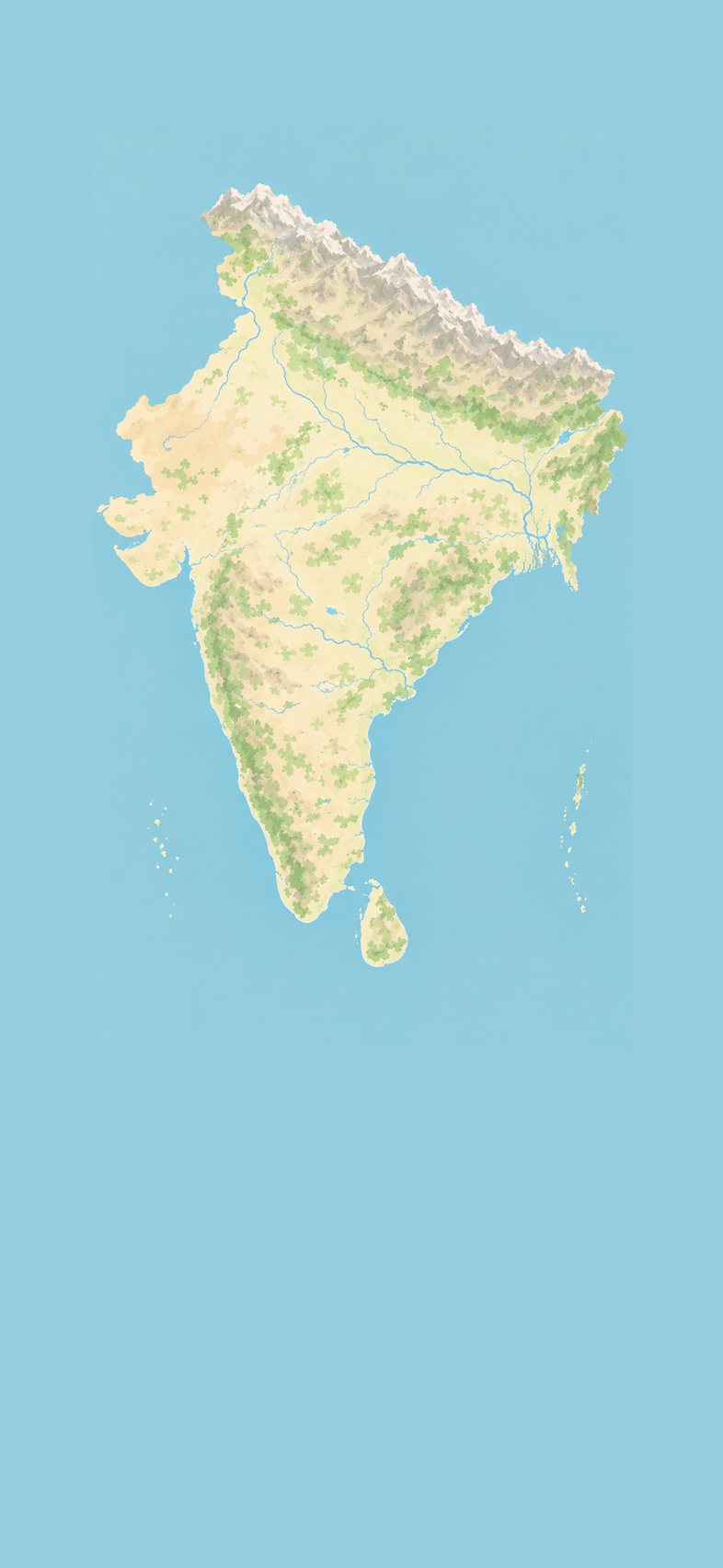
The Moments map treats photos like prints left on a table. Each one can be lifted, peeled at the corner, flipped to read who took it, and put back where it was taken. The crew's routes draw the day in the order it happened.
Three.js curl shader + GSAP frame timeline · interactive- Hover a print and its corner lifts toward you.
- Drag a print or the sunglasses. They spring back to their place.
- Click a print to hold it, click again to flip it, drag to peel it.
- Click the plane to fly it, drag it to spin it, and give the compass a swing.
Selected screens
12 screens · iPhone 393 × 852