Case study
Collaborative Research Editor
Bringing permissions, suggestions, and comments into research writing
at SciSpace (formerly Typeset) ↗︎TL;DR
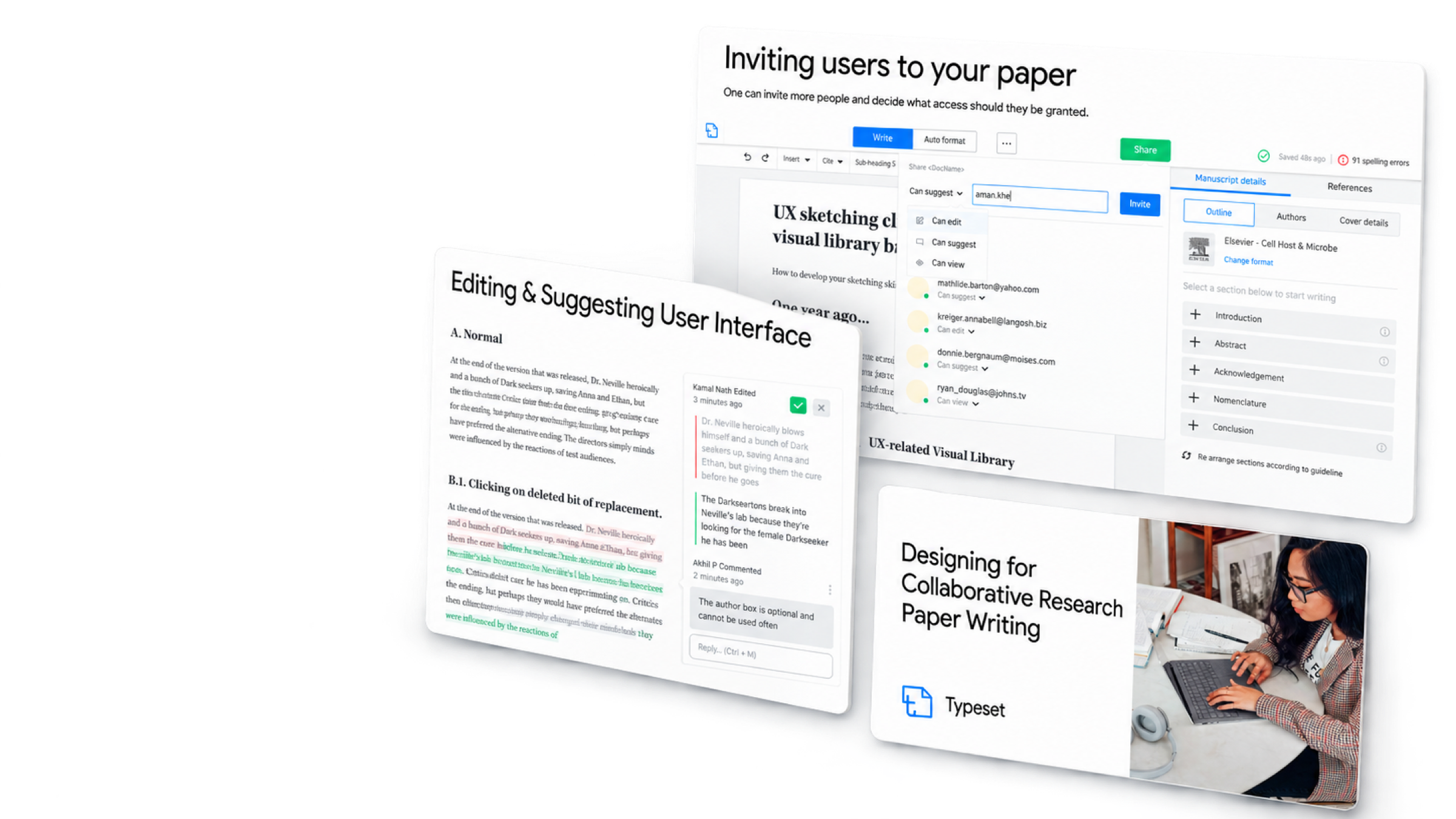
Research collaboration involves different permissions, sensitive manuscripts, and dense feedback. Drawing on focus groups with students, professors, and library administrators, I designed sharing, suggestions, and comments inside the editor so collaborators could review changes while authors retained control of the manuscript.
Choose your depth
The problem, my contribution, outcomes, and strongest screens.
My role
Product design · Research · Collaborative editing
Product focus
Permissions, suggestions, and comments embedded in scientific writing.
The Short Version
I designed Typeset’s collaborative editing workflow so researchers, students, professors, and reviewers could work on the same manuscript without leaving the editor. The broader platform grew from 800 to more than 3,000 colleges and past 150,000 users during this period.
The Mess
Research papers involve mentorship, several authors who’ve never been in the same room, confidential work, and dense feedback. Typeset needed to support viewing, suggesting, editing, and commenting, all while keeping ownership clear and the manuscript safe from a change nobody meant to make.
My Part in This
- Ran focus groups with students, professors, and library administrators to understand how research feedback moved between people and tools.
- Designed the permission model across owners, editors, suggesters, and view-only collaborators.
- Connected access requests and approvals to the live editing context instead of sending users into a separate administrative flow.
What Got Better
- Kept manuscript access and review attached to the writing context instead of a separate admin surface.
- Contributed during a period when the broader platform grew from 800 to 3,000+ colleges and served 150,000+ users.
Impact
What Actually Moved
For the Business
Brought permissions, suggestions, comments, and approvals into one research-writing workflow.
For the Humans
Researchers can collaborate without moving feedback away from the manuscript context it belongs to.
For the Spreadsheet
Increases institutional product value and retention by supporting the multi-person workflows behind academic writing.
Highlights evidence
4 essential screens from the final experience.
Continue reading