Case study
Last Mile Mobility
Designing reliable app-to-vehicle control for shared mobility
at Bounce ↗︎TL;DR
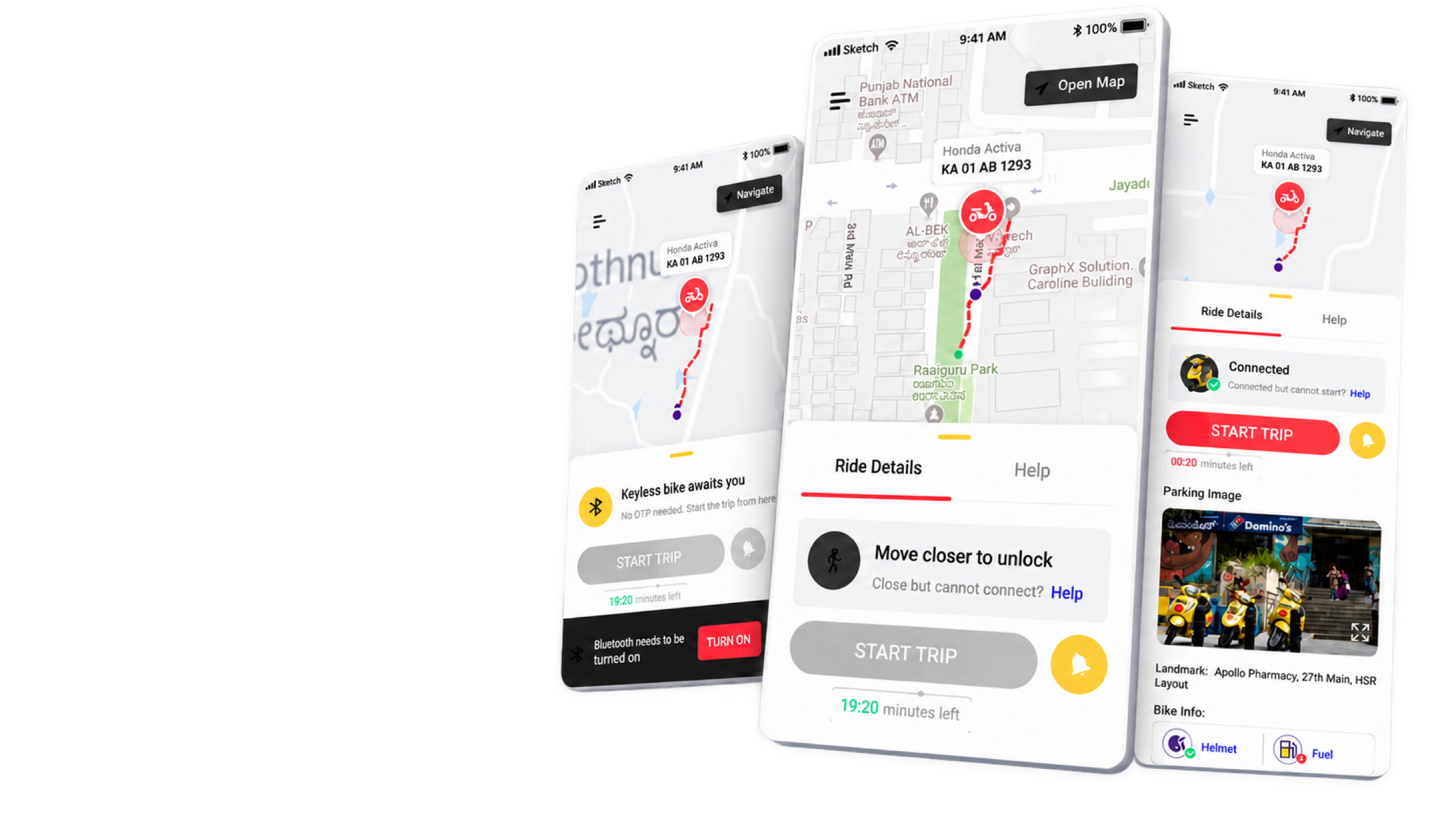
A scooter ride depends on more than the app: proximity, Bluetooth, hardware, sensors, and network conditions all affect what happens next. I redesigned the journey from booking to trip completion, making uncertain states understandable and providing recovery paths, including an OTP fallback when pairing fails.
Choose your depth
The problem, my contribution, outcomes, and strongest screens.
My role
Product design · Connected mobility · Service-state design
Product focus
A recoverable app-to-vehicle journey across booking, Bluetooth, riding, parking, and completion.
The Short Version
I redesigned Bounce’s connected-scooter journey: booking, proximity, Bluetooth pairing, the ride itself, and getting to the end of it. The work turned unpredictable hardware and flaky network transitions into product states a rider could actually understand and recover from.
The Mess
A scooter could be reserved, nearby, paired, connected, paused, offline, or just physically incomplete, helmet box open, say. The app had to coordinate the rider’s phone, Bluetooth, the vehicle’s own hardware, location, sensors, and parking evidence without ever stranding someone because one signal dropped.
My Part in This
- Mapped the service across the rider, mobile app, phone Bluetooth, scooter hardware, sensors, and network conditions.
- Defined the state model from reservation and proximity through pairing, active ride, pause, recovery, and trip completion.
- Designed contextual guidance for distance, connectivity, and physical actions, with an OTP fallback when pairing failed.
What Got Better
- Mapped digital, physical, hardware, sensor, and network states as one rider experience.
- Kept the journey recoverable when proximity, Bluetooth, or vehicle state became uncertain.
Impact
What Actually Moved
For the Business
Defined recoverable states across booking, proximity, Bluetooth, vehicle hardware, and trip completion.
For the Humans
Riders receive explicit guidance and fallback paths instead of becoming stranded when connectivity is uncertain.
For the Spreadsheet
Protects completed rides and vehicle utilisation by reducing avoidable start failures and abandoned trip flows.
Highlights evidence
4 essential screens from the final experience.
Continue reading